Can you use copper peptides with retinol?

The short answer
Yes, you can use copper peptides and retinol in the same skincare routine. They act through unrelated mechanisms, so there is no strong evidence they cancel each other out. The widely repeated advice to separate them (copper peptides in the morning and retinol at night, or on alternating evenings) is a tolerability precaution to limit retinol's well-documented irritation, not a proven chemical incompatibility. If your skin is sensitive, introduce retinol slowly on its own first, then add the copper peptide once you know how your skin handles the retinoid.
Short version: yes, copper peptides and retinol can share a routine, and the internet’s favorite rule (keep them apart, copper peptides in the morning and retinol at night) is about comfort, not chemistry. The two work through completely different mechanisms, so there is no good reason one would switch off the other, and there is very little peer-reviewed evidence testing them applied together at all. That means the confident-sounding claims on both sides (“they neutralize each other” or “they supercharge each other”) are running ahead of the data. Here is what the dermatology literature actually supports, why the separation advice exists, and how to layer them sensibly.
This page is the compatibility question specifically: can the two go together, and how. If you are still deciding which one to prioritize, our companion piece on copper peptides versus retinol compares them head to head, and our guide to building a peptide skin routine safely covers where each fits in a full lineup.
Can you use copper peptides with retinol?
Yes. Topical copper peptides and retinol are two different anti-aging actives that work on unrelated targets, so using both is a reasonable, common approach. GHK-Cu, the copper peptide, is a naturally occurring copper-binding tripeptide studied for signaling skin cells to rebuild collagen and other matrix components. The Pickart and Margolina review describes it as a peptide that “stimulates synthesis of collagen, selected glycosaminoglycans and small proteoglycan decorin,” and notes it “can penetrate the stratum corneum, which ensures its activity in cosmetic formulations” (Pickart & Margolina, Int J Mol Sci 2018). Retinol is a vitamin-A derivative that the skin converts, in two oxidation steps, to retinoic acid, which then acts through retinoic-acid receptors to raise collagen and speed cell turnover (Zasada & Budzisz, Postepy Dermatol Alergol 2019). Because these are two separate pathways, there is no mechanistic reason to treat them as mutually exclusive.
Do copper peptides and retinol cancel each other out?
There is no strong evidence that they do. A persistent piece of skincare folklore holds that copper peptides “deactivate” retinol (or vitamin C), but that claim is not backed by good peer-reviewed data specific to these two ingredients in a finished routine. The honest state of the evidence is that very few published trials test copper peptides and retinol applied together, so no one can say with authority that they neutralize each other. And, equally, no one can say they amplify each other. What the literature does establish is that each ingredient has an independent collagen-support signal on its own: GHK-Cu in small cosmetic studies (Pickart & Margolina 2018), and retinol through the well-characterized retinoic-acid pathway, where it “stimulates fibroblasts to synthesize collagen fibres” and “inhibits matrix metalloproteinases” (Zasada & Budzisz 2019). Absent direct combination trials, the reasonable position is neither fear nor hype: they are compatible, and the real variable to manage is not chemistry but irritation.
Why do people say to use them at separate times?
The separation advice exists because retinol’s main real-world limitation is irritation, and spacing your actives is the simplest way to keep that irritation manageable. Retinoids are well known to cause what dermatology calls the “retinoid reaction.” A 2006 Clinical Interventions in Aging review identifies it as “pruritus, burning sensation at the sites of application, erythema, peeling,” and calls it the most common adverse effect of topical retinoids, while noting retinol “produces considerably less transepidermal water loss, erythema and scaling than retinoic acid” (Mukherjee et al., Clin Interv Aging 2006). A 2024 formulation review in Dermatology Research and Practice describes the same picture, characterizing retinoid-induced irritation as “erythema, pruritus, a sensation of burning, xerosis, desquamation” and treating irritation reduction as the central formulation challenge for retinoids (Narsa et al., Dermatol Res Pract 2024). When you pile multiple actives on at once, you stack the odds of triggering that reaction. Splitting copper peptides into the morning and retinol into the evening, or alternating them on different nights, cuts the number of actives hitting your skin at any one time. That is the whole logic: it is a tolerability precaution, not evidence that the two molecules are chemically incompatible.
How should you layer copper peptides and retinol?
Because the combining evidence is thin, the sensible approach is practical and tolerability-driven rather than a rigid chemistry rule. A few options, roughly from gentlest to most aggressive:
- Separate by time of day. Apply the copper peptide in the morning and the retinol at night. This is the most-repeated convention and the easiest to sustain, and it fits the fact that retinol is generally used in the evening.
- Alternate nights. Use the copper peptide on some evenings and the retinol on others while your skin adjusts, so neither is doing all the work on the same night.
- Layer in the same routine, with spacing. If you want both at once, apply one, let it absorb for several minutes, then apply the other. Buffering with a plain moisturizer is a recognized way to reduce retinoid irritation while keeping most of the benefit, and gentle barrier-supporting ingredients pair well with either active.
Whichever you choose, introduce retinol slowly and on its own first (start a couple of nights a week and build up), then add the copper peptide once you know how your skin tolerates the retinoid. If irritation shows up, pull back frequency before you abandon the combination. None of these are medical treatments, and none work overnight: the underlying ingredient studies run over weeks to months, so give any routine time before judging it.
Who should be cautious about combining them?
If your skin is sensitive, reactive, or new to retinoids, be deliberate rather than enthusiastic. The person most likely to run into trouble is not someone whose actives are chemically fighting each other; it is someone who introduced too much, too fast, and hit the retinoid reaction described above (Mukherjee et al. 2006; Narsa et al. 2024). Patch-testing a new product, spacing your actives, buffering retinol with a moisturizer, and building frequency gradually all lower that risk. It is also worth drawing one clear line: everything here is about topical, cosmetic copper peptides, the over-the-counter GHK-Cu in serums and creams. Injected copper peptides are a different route with no published human trials, and they are not part of this routine conversation. If your skin is persistently irritated, or you are managing a condition like rosacea or eczema, that is a reason to get individual guidance before layering strong actives.
The bottom line
You can use copper peptides and retinol together. They work through different mechanisms, there is no solid evidence they cancel each other out, and the popular advice to keep them apart is really about limiting retinol’s irritation rather than avoiding a chemical clash. Space them by time of day or alternate nights if your skin is sensitive, introduce the retinoid slowly, and let a routine run for weeks before deciding whether it is working. If you would rather not sort the sequencing out by trial and error, a licensed provider can match ingredients and strengths to your skin and your goals, so a consult is about your skin-aging concerns and what a provider recommends for them, never a product promised before anyone has seen your skin.
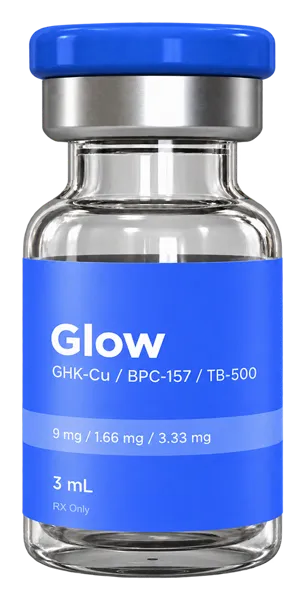
Status (injectable GHK-Cu): Not FDA-approved; sold by some telehealth providers as a compounded prescription. What these status terms mean.
Sources and further reading
Every ingredient and safety statement on this page traces to a peer-reviewed dermatology source, listed here so you can verify each one directly.
- Pickart L, Margolina A. Regenerative and Protective Actions of the GHK-Cu Peptide in the Light of the New Gene Data, International Journal of Molecular Sciences 2018 (PMC): GHK-Cu as a naturally occurring copper-binding tripeptide that stimulates collagen, glycosaminoglycans and decorin, penetrates the stratum corneum, and is used in cosmetic formulations.
- Mukherjee S, Date A, Patravale V, et al. Retinoids in the treatment of skin aging: an overview of clinical efficacy and safety, Clinical Interventions in Aging 2006 (PMC): the “retinoid reaction” (pruritus, burning, erythema, peeling) as the main adverse effect, and retinol producing less transepidermal water loss, erythema and scaling than retinoic acid.
- Zasada M, Budzisz E. Retinoids: active molecules influencing skin structure formation in cosmetic and dermatological treatments, Postępy Dermatologii i Alergologii 2019 (PMC): retinol’s two-step conversion to retinoic acid and its stimulation of fibroblast collagen synthesis with MMP inhibition.
- Narsa AC, Suhandi C, Afidika J, et al. A Comprehensive Review of the Strategies to Reduce Retinoid-Induced Skin Irritation in Topical Formulation, Dermatology Research and Practice 2024 (PMC): retinoid-induced irritation characterized as erythema, pruritus, burning, xerosis and desquamation, and irritation reduction as the central formulation challenge for retinoids.
Educational information about skincare ingredients only, not medical advice. Every ingredient and safety statement is sourced to the peer-reviewed dermatology literature linked above and is accurate as of July 12, 2026.
Advertising disclosure: links marked "Paid link" go to Bodybuilding Peptides (trybbpeptides.com), an affiliate destination, and Complexion Science may earn a commission if you buy there. Our coverage is independent of that relationship, and nothing on this page is medical or legal advice.
 See it at Bodybuilding Peptides