How to build a peptide skincare routine safely (without wrecking your skin)
The short answer
Build a peptide routine the same careful way you would add any active: introduce one product at a time, patch-test it for about a week, and layer it in a sensible order: cleanse, then thinner water-based serums (including copper peptides) before heavier creams, with sunscreen every morning. Copper peptides (GHK-Cu) are a gentle, cosmetic support active, so they slot in easily, but the common advice is to separate them in time from a low-pH vitamin C serum and to alternate nights with a retinoid rather than piling everything on at once. Give any routine six weeks to three months before judging it, and see a board-certified dermatologist if you have a medical skin concern or persistent irritation. This page is about topical peptide skincare.
Peptide serums, and copper peptides in particular, are marketed as the sophisticated next step past your basic moisturizer, and the marketing rarely tells you the boring part: how to actually fit one into a routine without irritating your skin or wasting your money. The good news is that a peptide routine is not exotic. It follows the same rules as any good routine built around actives, which are mostly about sequence, restraint, and patience. This guide walks through where copper peptides belong in your layering order, what pairs well with them and what is better kept apart, how to patch-test before you commit, what a realistic timeline looks like, and the point at which the honest move is to stop adding serums and see a dermatologist. Everything here is about topical peptide products you apply to your skin; injected peptides are a different route, touched on briefly near the end.
How do you build a skincare routine with peptides safely?
Build it slowly and one product at a time, because the single biggest mistake with any active is doing too much at once. The American Academy of Dermatology is blunt about this: “using several anti-aging products at the same time can irritate your skin,” and “when you irritate your skin, signs of aging become more noticeable” (AAD, “How to maximize results from anti-aging skin care products”). A copper-peptide serum is one active. If you introduce it on the same week you also start a retinoid and an exfoliating acid, and something flares, you will have no idea which product caused it.
The safe sequence is simple. Start from a working base of a gentle cleanser, a moisturizer, and a daily sunscreen, since AAD lists sun protection and moisturizer among its core anti-aging steps (AAD, maximize anti-aging products). Add one new active, use it consistently for a few weeks, and only then consider the next. Copper peptides are a reasonable first “treatment” active to add because they are gentle, but the discipline matters more than the order: introduce, observe, and only stack once your skin has told you the new product is fine. That is the whole method. The sections below fill in the specifics of order, pairings, testing, and timing.
Where do copper peptides go in your layering order?
Copper peptides go early in the layering order, on clean skin and before heavier creams, following the standard “thinnest to thickest” rule. After cleansing (and any toner or essence), apply thin, water-based serums first so they reach skin without a thick occlusive layer in the way, then seal with moisturizer, and finish a morning routine with sunscreen. A copper-peptide serum is usually a light, water-based fluid, so it sits in that serum step, roughly: cleanse, copper-peptide serum, moisturizer, and sunscreen in the daytime.
The reason GHK-Cu earns a spot at all is that it is a small copper-binding tripeptide your skin makes naturally, and its levels fall with age, dropping from roughly 200 ng/mL of GHK in the blood at age 20 to about 80 ng/mL by age 60 (Pickart & Margolina, Int. J. Mol. Sci., 2018). In lab studies it signals skin fibroblasts to build collagen and remodel the skin matrix (Pickart, Vasquez-Soltero & Margolina, BioMed Research International, 2015), which is the mechanistic case for using it on aging skin. For a fuller, sourced look at that evidence and how strong it really is, see our guide on GHK-Cu copper peptides for skin. What matters for routine-building is that it is a gentle “support” active, not a heavy hitter, so it layers politely with most things and does not demand the buffering a retinoid does.
What pairs well with copper peptides, and what should you separate?
Copper peptides pair well with hydrators and gentle supporting ingredients, and are best separated in time from your strongest, most acidic actives rather than layered on top of them at the same moment. On the “pairs well” side, humectants like hyaluronic acid and glycerin, niacinamide, and a plain moisturizer are all comfortable companions, and a copper-peptide serum under moisturizer is an easy, low-drama nightly step. The ingredients people debate are the two strongest actives in most routines: vitamin C and retinoids.
The retinoid question is mostly about irritation, not chemistry. Retinoids are the best evidence-backed anti-aging active, because they “spur faster turnover of surface skin cells and boost collagen,” which “improves skin tone and reduces fine lines and wrinkles” (AAD, “Retinoid or retinol?”). They can also dry and peel skin, so the sensible approach is to use copper peptides on the nights you are not using your retinoid, or in the morning if your retinoid is a nighttime product. That keeps the gentle active and the irritating one from stacking. We compare the two directly, including whether they cancel out, in copper peptides vs retinol. The vitamin C question gets its own section below, because it is the pairing people ask about most.
Can you use copper peptides and vitamin C together?
Yes, but the common and sensible advice is to use them at different times of day rather than layering them in the same step. The concern is formulation chemistry: copper peptides are a copper-bound complex, and a very low-pH, highly acidic product, most notably a pure L-ascorbic acid vitamin C serum, is often kept apart from copper peptides on the theory that a strongly acidic environment can destabilize the copper complex while the copper can oxidize the vitamin C, blunting both. The clean fix is timing: vitamin C in the morning, where its antioxidant role during sun-exposure hours makes biological sense, and copper peptides in the evening.
Two honest caveats keep this from becoming dogma. First, the “copper peptides cancel out vitamin C” warning is a widely repeated formulation caution rather than a well-quantified clinical finding, so treat the AM/PM split as sensible hygiene, not an ironclad rule; some gentler, more stable vitamin C derivatives are also less prone to the low-pH conflict. Second, and more important, the real risk of forcing vitamin C, a retinoid, and copper peptides into one routine is not a dramatic chemical reaction but plain irritation from too many actives at once, which is exactly the outcome AAD warns about (AAD, maximize anti-aging products). If you want all three, spread them across mornings, evenings, and alternate nights, and add them one at a time.
How do you patch-test a new peptide product?
Patch-test by applying the product to one small, protected patch of skin for several days before you ever put it on your whole face. The AAD’s method is specific: choose “a quarter-sized spot on your skin where the product won’t be rubbed or washed away, such as the underside of your arm or the bend of your elbow,” apply it “twice daily for seven to 10 days,” using “the normal amount and thickness you would use as if you were applying the product regularly,” and if after that window “you don’t have a skin reaction, such as red, itchy, or swollen skin,” go ahead and use it (AAD, “How to test skin care products”). AAD’s anti-aging guidance gives a shorter version too, “apply a small amount to your inner forearm” and “repeat this twice a day for four to five days” (AAD, maximize anti-aging products).
If a reaction does show up, AAD advises you “gently wash the product off as soon as possible, and don’t use it again.” A patch test is worth the delay for two reasons. Any ingredient, including a preservative rather than the peptide itself, can trigger an individual reaction, and testing on a discreet patch means a bad reaction happens on your forearm instead of across your face. Patch-testing also pairs naturally with the one-active-at-a-time rule: test the new copper-peptide serum on its own, so that if nothing flares you can trust the product before you begin layering it with everything else.
How long do peptide skincare results take?
Expect weeks to months, not days, and judge the routine on that timescale rather than on the first week. AAD sets the realistic clock plainly: “a moisturizer can plump up fine lines in a few days, but most products take at least six weeks to work. Sometimes it can take up to three months,” and the advice that follows is simply to “give the product time to work” (AAD, maximize anti-aging products). Copper peptides are no exception. The small human studies behind them ran on the order of 12 weeks and reported modest improvements in the look of firmness and fine lines, not overnight change (Pickart, Vasquez-Soltero & Margolina, 2015).
That timeline is a feature, because it also tells you how to run the experiment. Give a new active a fair trial of roughly two to three months of consistent use before deciding it works or does not, and change one variable at a time so you can actually read the result. Consistency over months beats a crowded routine you abandon after two weeks, and it beats the temptation to keep adding new products in search of a faster result. Photos in the same lighting every few weeks are more reliable than the mirror, which adjusts to whatever it sees daily.
What does a simple, safe peptide routine actually look like?
A safe starter routine is short, sequenced thinnest-to-thickest, and built around sun protection. Here is a plain example that respects every rule above; adjust it to your own skin and the specific products you own.
| Step | Morning | Evening |
|---|---|---|
| 1. Cleanse | Gentle cleanser | Gentle cleanser |
| 2. Treat (thin serum) | Vitamin C (optional) | Copper-peptide serum, on non-retinoid nights |
| 3. Retinoid | None | Retinoid on alternate nights, started slowly |
| 4. Moisturize | Moisturizer | Moisturizer |
| 5. Protect | Broad-spectrum sunscreen | None |
The load-bearing details are the ones people skip. Retinoids are used “only at night” because they “can make skin more sensitive to sun,” which is exactly why daily sunscreen is non-negotiable when a routine includes one (AAD, “Retinoid or retinol?”). Copper peptides and the retinoid trade nights rather than share them, so gentle and irritating actives never stack. And the whole table is meant to be arrived at gradually, one active at a time, not adopted wholesale on day one. If your skin is calm on a shorter version, there is no prize for making it more complicated.
When should you see a dermatologist instead of adding another serum?
See a board-certified dermatologist when the issue is medical, when irritation persists, or before starting a stronger active if you are unsure it suits your skin, rather than reaching for one more product. Topical copper peptides are a cosmetic support ingredient, not a treatment for any diagnosable skin condition, so acne that scars, rosacea, eczema, sudden changes in a mole, or anything that needs a diagnosis is a reason to book a visit, not to add a serum. AAD specifically suggests seeing a dermatologist if you have moderate or severe acne scarring or are considering a retinol product and want to know whether it fits your skin type (AAD, “Retinoid or retinol?”).
A dermatologist or licensed provider is also simply better at sequencing actives for one specific face than any generic chart, including this one. If a patch test flares, if your skin stays red or stings after you introduce something, or if you have tried a routine faithfully for a few months with nothing to show for it, that is the moment professional eyes save you money and irritation. The instinct to solve a stalled routine by buying another active is usually the wrong one, and copper peptides also show up in the hair conversation, which we cover separately in our guide to GHK-Cu for hair growth.
Do topical peptide serums and injectable peptides belong in the same routine?
No: a skincare routine is built from topical products, and injected peptides are a separate decision with a different evidence base. Topical peptide serums, including copper-peptide products, are sold as cosmetics, which are not reviewed by the FDA before sale and make claims about the appearance of skin rather than treating a condition (FDA, “FDA Authority Over Cosmetics”). The human skin results for copper peptides come from creams and serums applied to the skin, while studies of GHK-Cu given systemically were done in animals (Pickart & Margolina, 2018). So nothing in the layering, pairing, and timeline advice above tells you anything about an injection, and an injectable does not replace the basics of cleansing, moisturizing, and daily sunscreen. For how the two routes compare on evidence and side effects, see topical vs prescribed skin peptides, and for what “prescription-grade” labels really mean, see our guide to prescription-grade skin peptides. The same logic applies to tanning injections and nasal sprays: Melanotan II is a peptide with whole-body effects rather than a skincare step, and we cover what it does to skin and moles in is Melanotan safe for tanning?
The bottom line on building a peptide routine
A safe peptide routine is less about the peptide and more about the discipline around it: add one active at a time, patch-test for about a week, layer thinnest to thickest with sunscreen every morning, separate your strongest actives in time rather than stacking them, and give the whole thing six weeks to three months before you judge it (AAD, maximize anti-aging products). Copper peptides fit that framework easily because they are gentle and have a real, if modest, mechanistic story behind them (Pickart, Vasquez-Soltero & Margolina, 2015). Keep the routine short, keep your expectations honest, and when a concern is medical or a routine stalls, see a dermatologist rather than buying one more bottle.
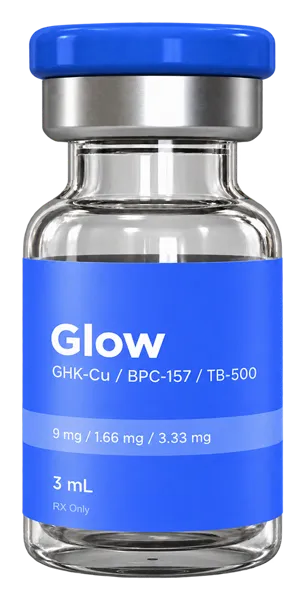
Status (injectable GHK-Cu): Not FDA-approved; sold by some telehealth providers as a compounded prescription. What these status terms mean.
Sources and further reading
Every routine rule and clinical figure on this page traces to a primary source, listed here so you can verify it directly.
- American Academy of Dermatology. How to maximize results from anti-aging skin care products
- American Academy of Dermatology. How to test skin care products (patch testing)
- American Academy of Dermatology. Retinoid or retinol?
- Pickart L, Vasquez-Soltero JM, Margolina A. GHK Peptide as a Natural Modulator of Multiple Cellular Pathways in Skin Regeneration. BioMed Research International, 2015;2015:648108
- Pickart L, Margolina A. Regenerative and Protective Actions of the GHK-Cu Peptide in the Light of the New Gene Data. Int. J. Mol. Sci. 2018;19(7):1987
- U.S. Food & Drug Administration. FDA Authority Over Cosmetics: How Cosmetics Are Not FDA-Approved, but Are FDA-Regulated
Advertising disclosure: links marked "Paid link" go to Bodybuilding Peptides (trybbpeptides.com), an affiliate destination, and Complexion Science may earn a commission if you buy there. Our coverage is independent of that relationship, and nothing on this page is medical or legal advice.
 See it at Bodybuilding Peptides