Topical GHK-Cu (copper peptide) for skin: what the serums can and cannot do
The short answer
Topical GHK-Cu is a copper-binding peptide (glycine, histidine, lysine) used in serums and creams, often labeled copper tripeptide-1. Lab studies show it stimulates collagen and skin repair, and small, mostly industry-linked human cream studies report modest gains in firmness and fine lines. There is no good evidence that it treats active acne.
Copper peptides have become, in NPR’s words, “the darling of social media skin care hacks,” with people “smearing the electric-blue tincture on their face” (NPR, September 2026). Topical GHK-Cu is the part of that trend with real human skin data behind it, even if that data is smaller and softer than the marketing suggests. This guide covers what the copper peptide is, what it does in skin, what the cream studies actually found, whether it helps acne, how to read a serum label, side effects, how it compares with retinol and vitamin C, and what the skincare crowd is saying. For the full story of the molecule, including the injectable side, see our network’s GHK-Cu overview.
What is topical GHK-Cu (copper peptide)?
Topical GHK-Cu is a tiny three-amino-acid peptide, glycine-histidine-lysine, bound to a single copper ion and put into serums and creams. It occurs naturally in the human body: it was first isolated in 1973 by biochemist Loren Pickart, as an activity in human albumin that made old liver tissue behave more like younger tissue (Pickart, Vasquez-Soltero & Margolina, BioMed Research International, 2015). The peptide binds copper with high affinity, which is where the “-Cu” comes from, and on ingredient lists the complex is commercially called copper tripeptide-1 (Najafi et al., Archives of Internal Medicine Research, 2026).
The reason it draws so much interest for aging skin is that the body’s own supply falls off over time. Plasma levels of GHK are roughly 200 ng/mL at age 20 and decline to about 80 ng/mL by age 60, a drop of more than half (Pickart & Margolina, Int. J. Mol. Sci., 2018). The logic behind topical copper peptides is to put some of that signal back onto aging skin from the outside. That is a plausible rationale, not a proven promise.
What does GHK-Cu do for skin?
In the lab, GHK-Cu acts as a repair signal for the cells and scaffolding that keep skin firm. Applied to skin fibroblasts (the cells that build the dermis), “GHK-Cu stimulated collagen, dermatan sulfate, chondroitin sulfate, and a small proteoglycan, decorin” (Pickart, Vasquez-Soltero & Margolina, 2015). Collagen gives skin its structure, the glycosaminoglycans (dermatan and chondroitin sulfate) help it hold water, and decorin helps organize collagen fibers into orderly bundles rather than disordered scar tissue.
GHK-Cu also regulates turnover rather than only adding collagen. The same review describes it stimulating both the synthesis and the breakdown of collagen and glycosaminoglycans, and modulating both the matrix metalloproteinases (MMPs) that break collagen down and their inhibitors, TIMP-1 and TIMP-2 (Pickart, Vasquez-Soltero & Margolina, 2015). In plain terms, the proposed benefit is balanced remodeling: clearing worn-out collagen while laying down fresh, well-organized collagen.
A newer strand of research looks at gene activity. Using gene-expression data, the 2018 review reports that GHK shifted the expression of about 31.2% of human genes by at least 50%, increasing activity in roughly 59% of the affected genes and decreasing it in about 41% (Pickart & Margolina, 2018). An independent 2026 systematic review cautions that the “genome-resetting” framing seen in some articles likely overstates things, since GHK-Cu is not editing DNA (Najafi et al., 2026). Broad gene changes in cultured cells are a mechanism hint, not a skincare result. For a wider answer to “what does GHK-Cu do,” including hair and wound healing, see the GHK-Cu overview.
How do people use topical GHK-Cu?
Most people use GHK-Cu as a leave-on serum or cream for firmness, fine lines and overall skin quality, and that is the form nearly all the human evidence covers. Three patterns show up in the research and reporting:
- Daily anti-aging serums and creams. The classic use, and the one the facial and eye-cream studies tested (Pickart, Vasquez-Soltero & Margolina, 2015).
- After procedures. The 2026 systematic review notes that copper tripeptide creams have been part of post-laser, post-Mohs surgery, post-microneedling and post-hair-transplant care regimens for nearly two decades, while the trial evidence specific to those uses is small (Najafi et al., 2026).
- With microneedling or dermarollers. Because the peptide struggles to cross the skin barrier on its own, some people pair serums with needling devices. The same review says products combining microneedle devices and copper peptide serums are on the market without rigorous clinical validation (Najafi et al., 2026).
What do the human studies on copper-peptide creams show?
A handful of small human studies report that copper-peptide creams modestly improve the look of aging skin. Evidence level, in words: small human cosmetic studies, most linked to the ingredient’s developers or the cosmetics industry, on top of a large body of cell and animal work. The table lists the studies most often cited.
| Study (as reported) | Who and how long | What was compared | Reported result | Caveat |
|---|---|---|---|---|
| Thigh-skin collagen biopsy | Women; creams on thigh skin, one month (2015 review; the 2018 review says 12 weeks) | GHK-Cu vs vitamin C cream vs retinoic acid | Collagen rose in 70% (GHK-Cu), 50% (vitamin C) and 40% (retinoic acid) of women | Small pilot; the 2026 review says it never appeared in full peer-reviewed form (Najafi et al., 2026) |
| Facial cream | 71 women with photoaging; 12 weeks | GHK-Cu cream | Better laxity, clarity and appearance; fewer fine lines; thicker, denser skin | Conference abstract only (Najafi et al., 2026) |
| Eye cream | 41 women with photodamage; 12 weeks | GHK-Cu vs placebo vs vitamin K eye cream | GHK-Cu beat both controls on lines, wrinkles and skin density | Conference abstract only (Najafi et al., 2026) |
| Second facial cream | 67 women aged 50 to 59; 12 weeks, twice daily | GHK-Cu cream | Improved laxity, firmness, fine lines, coarse wrinkles and mottled pigmentation | Published as a 2005 book chapter, not a journal trial (2015 review) |
| Nano-lipid serum, small pilot | Female volunteers; 8 weeks, twice daily | GHK-Cu vs carrier alone vs Matrixyl 3000 | Wrinkle volume down 55.8% and depth down 32.8% vs control serum | Small sample (Najafi et al., 2026) |
| After CO2 laser resurfacing, randomized | 13 patients completed; 12 weeks | Skin care with vs without GHK-Cu | No objective difference in redness, wrinkles or skin quality; users more satisfied | Tiny; not run by the ingredient’s developers (Miller et al., 2006) |
The first four rows are summarized in the 2015 and 2018 reviews (Pickart, Vasquez-Soltero & Margolina, 2015; Pickart & Margolina, 2018), and the nano-lipid serum trial is described in the 2018 review. Read carefully, the thigh-skin result says a majority of users showed a measurable collagen bump and that GHK-Cu edged out two established comparators in that one test, not that it is categorically stronger than retinoids. The honest headline: copper-peptide creams are associated with modest, visible cosmetic improvements in small trials.
How strong is the evidence for topical GHK-Cu?
The evidence is encouraging but limited, for three reasons. First, scale and publication: most human GHK-Cu studies have fewer than 100 participants and run 8 to 16 weeks, several of the most cited “trials” were published only as conference abstracts, and there is no peer-reviewed phase III trial of GHK-Cu in any human indication (Najafi et al., 2026). PeptideAgent’s GHK-Cu profile is similarly cautious about the topical evidence and keeps it separate from the injectable form, which it describes as an unapproved drug with no human trial.
Second, independence: about 35% of the GHK-Cu primary literature in that review’s window includes Loren Pickart or Anna Margolina of Skin Biology Inc. as an author, which the reviewers say limits the independence of the evidence base (Najafi et al., 2026). NPR likewise describes the controlled human studies as generally small trials funded by the cosmetic industry (NPR, 2026). The small randomized laser-resurfacing study above, which was not run by the ingredient’s developers, found no objective benefit (Miller et al., 2006).
Third, level of proof: the most dramatic findings, the collagen and matrix effects and the broad gene-expression changes, come largely from cell cultures and animal models, with human data concentrated in the smaller cosmetic studies (Pickart & Margolina, 2018). A 2025 pharmaceutics review put it bluntly: on cell studies GHK “can be considered as an anti-wrinkle ingredient,” yet there is “a surprising absence of clinical studies” using GHK-Cu (Mortazavi et al., BioImpacts, 2025).
None of that means GHK-Cu “doesn’t work.” It means the accurate claim is narrow: a plausible mechanism, a long research history, and small human studies showing modest improvement in the appearance of aging skin, without the large, independent trials that would let anyone promise a specific result. A realistic expectation is a supporting-actor ingredient used consistently over months, not a transformation.
Does GHK-Cu help with acne?
There is no good evidence that topical GHK-Cu treats active acne. A PubMed search we ran on October 12, 2026, for GHK-Cu or copper peptides and acne returned three records, and none tested GHK-Cu on active breakouts; the human studies that exist are about acne scars, and their results are mixed.
- Acne scars, split-face study (2025). Adding a 0.5 to 1% GHK-Cu serum to dermaroller treatment gave an early improvement in scar scores, but by week 16 there was no significant difference between groups, and the authors flagged a hyperpigmentation risk in the GHK-Cu arm (Najafi et al., 2026, summarizing Khanna 2025).
- Acne scars, case series (2019). GHK-Cu plus dermaroller cut scar scores by 50.3% versus 26.3% with dermaroller alone (Najafi et al., 2026). A case series is weaker evidence than the split-face comparison.
- A multi-ingredient scar gel (2025). An open-label study of a gel combining copper tripeptide-1 with three other actives reported less visible acne scarring over 45 days in women, but no comparison group is described, it could not isolate the copper peptide, and included authors employed by the product’s maker (Patel et al., Cureus, 2025).
The reason people try it on breakouts is GHK-Cu’s anti-inflammatory signal in cell and animal studies (Najafi et al., 2026), which is plausible but untested on acne itself. Acne is also where the social pitch runs furthest ahead of the data: influencers have sold injectable peptides as a “glow up potion” for everything from hormonal acne to thinning hair (The Guardian, 2026). If you have active acne, a dermatologist has treatments with far stronger evidence.
Does topical GHK-Cu actually get into the skin?
Some of it does, but getting enough of it through the skin barrier is the ingredient’s main weak spot. The 2015 review says GHK-Cu appears to pass the outer layer of skin in quantities sufficient to trigger repair (Pickart, Vasquez-Soltero & Margolina, 2015). The independent 2026 review is less confident: the peptide is hydrophilic and charged, so passive diffusion across intact skin is poor (Najafi et al., 2026).
Formulation matters for that reason. The 2025 BioImpacts review notes that binding copper and adding a fat-loving chemical group both increase permeability, and that microneedle pretreatment is a promising but under-studied way to push peptides further in (Mortazavi et al., 2025). This penetration question is also the injectable crowd’s strongest argument, which is why it comes up in nearly every GHK-Cu comment thread.
What to look for in a GHK-Cu serum
The label can tell you what kind of copper peptide is in the bottle and how the product is positioned, but not how well it works. Here is what the common label terms mean, where a source supports it. We do not recommend specific products.
| Label term or feature | What it means |
|---|---|
| ”Copper tripeptide-1” | The ingredient-list name for GHK-Cu (Najafi et al., 2026) |
| “Copper peptides” (generic) | Usually GHK-Cu, but related copper peptides exist; AHK-Cu, for example, is a different tripeptide-copper complex studied on hair follicles (Pyo et al., 2007) |
| Pal-GHK (palmitoylated GHK) | A modified GHK with a fatty chain added to help it enter skin; it is used in anti-wrinkle products but has little clinical data of its own (Mortazavi et al., 2025) |
| A percentage on the label | Topical studies have used 0.05% to 2%, and the dose response is not linear, so there is no established “best” strength (Najafi et al., 2026) |
| Blue color | Typical of copper-peptide products, which NPR describes as an “electric-blue tincture” (NPR, 2026); color alone does not confirm the amount of GHK-Cu |
| Appearance claims (“firmer-looking”) | Normal for a cosmetic. Cosmetics are not reviewed by FDA before sale, and their claims are about appearance rather than treating a condition (FDA) |
| “Use with microneedling” | No published full-text randomized trial has tested GHK-Cu delivered by microneedle arrays (Najafi et al., 2026) |
Stability is the other thing formulators worry about. The 2015 review reports that GHK-Cu is prone to breakdown under oxidative stress, was stable in water between pH 4.5 and 7.4 in testing, and is highly water-loving (Pickart, Vasquez-Soltero & Margolina, 2015), and the BioImpacts review lists its hydrophilic, unstable nature as the main formulation challenge (Mortazavi et al., 2025). In practice that means a serum is only as good as its formula, which no label fully reveals.
What are the side effects of topical GHK-Cu?
Topical GHK-Cu is generally considered well tolerated. The 2018 review states it has been “widely used in anti-aging and cosmetic products in humans for decades without any adverse effects” (Pickart & Margolina, 2018), a claim from authors with a commercial interest. The independent evidence adds one specific flag: the 2025 acne-scar trial noted a hyperpigmentation risk in the GHK-Cu arm (Najafi et al., 2026).
Sensible precautions apply. Patch-test a new product on a small area for a few days before using it on your whole face, introduce it on its own rather than alongside several new actives, and check with a clinician first if you are pregnant or breastfeeding, have eczema or rosacea, or already use prescription-strength topicals. For copper allergy, the sleep stories and who should be cautious, see our guide to whether topical GHK-Cu is safe. And copper peptides are a cosmetic ingredient, not a treatment for acne, eczema, precancerous lesions or anything else that needs a diagnosis.
Copper peptides vs retinol vs vitamin C: how do they compare?
Copper peptides, retinoids and vitamin C work through different mechanisms and sit at different evidence levels, which is why many routines use more than one. Retinoids have the deepest human evidence for photoaging, including a two-year randomized, vehicle-controlled trial of tretinoin cream (Najafi et al., 2026, citing Kang 2005). One dermatologist told NPR he considers GHK-Cu on par with topicals containing vitamin C and antioxidants (NPR, 2026).
| Ingredient | Main proposed action on skin | Human evidence level, in words | Typical irritation | Best thought of as |
|---|---|---|---|---|
| GHK-Cu (copper peptide) | Signals fibroblasts to make collagen and matrix; influences MMP/TIMP remodeling (2015 review) | Limited: small cosmetic studies, several only conference abstracts (2026 review) | Low; generally well tolerated topically | A gentle “support” active for firmness and appearance |
| Retinol / retinoids | Speed cell turnover and stimulate collagen | Strong: includes a two-year randomized, vehicle-controlled tretinoin trial (2026 review) | Moderate to high (dryness, peeling, sun sensitivity) | The best-evidenced anti-aging active |
| Vitamin C (L-ascorbic acid) | Antioxidant; cofactor in collagen synthesis; brightening | Moderate | Low to moderate (can sting at low pH) | An antioxidant and brightening partner |
The practical read: if you want the single most evidence-backed anti-aging active, that is a retinoid, and copper peptides are better framed as a gentle complement, especially for people whose skin cannot tolerate stronger actives. Our full head-to-head is in copper peptides vs retinol.
Can you use copper peptides with retinol or vitamin C?
In most routines, yes, if you separate them rather than layering everything at once. The common practice is to use them at different times, for example vitamin C in the morning and copper peptides in the evening, or copper peptides on nights off your retinoid. The “copper peptides cancel out vitamin C” warning is a widely repeated formulation caution rather than a measured clinical finding; the stability data above only tested GHK-Cu between pH 4.5 and 7.4. Stacking several actives mostly raises the odds of irritation, so add one at a time. We cover timing and pairings in detail in can you use copper peptides with retinol.
Is topical GHK-Cu different from injectable GHK-Cu?
Yes. Every human skin result on this page comes from a product applied to the skin (Pickart, Vasquez-Soltero & Margolina, 2015; Pickart & Margolina, 2018). Injecting GHK-Cu is a newer trend, and NPR reports there is no data from published human studies to show that practice is safe and effective (NPR, 2026). The review evidence for systemic GHK-Cu comes from animals such as mice, rats and pigs, and a PubMed search we ran on October 12, 2026, filtered to clinical and randomized trials of injected GHK-Cu in people, returned no results.
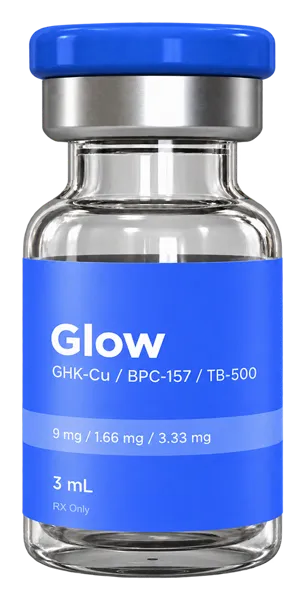
So the skin findings here are findings about topical use, and they should not be read as evidence for injections. We compare the two routes in topical vs prescribed skin peptides, the injection trend itself in our explainer on GHK-Cu peptide injections, and the injectable “glow” blend that pairs GHK-Cu with BPC-157 and TB-500 in our glow peptide explainer. Copper peptides also come up in hair care, covered in our guide to GHK-Cu for hair.
What is the skincare crowd saying about GHK-Cu?
The conversation has split into a topical camp and an injection camp, and the skincare side is the calmer of the two. Our community tracker does not yet have a dedicated GHK-Cu dataset, so this section draws on press reporting and on the X posts we collected for other peptides.
- The dermatologist view is cautiously positive on topicals. Dr. David Goldberg told NPR “the science behind this is very solid” and put GHK-Cu on par with vitamin C and antioxidant topicals (NPR, 2026).
- Penetration is the big debate. Goldberg also said injecting might add something because the molecule does not easily penetrate deeper when applied topically, yet he and other dermatologists told NPR they are advising patients to hold off on injecting until human studies are done (NPR, 2026).
- A clinician who offers both favors the serum. Erik Marks, who runs a longevity clinic, told NPR that in his experience the topicals work much better for skin and hair, and that most of his GHK-Cu consults are with people who already self-injected products bought online (NPR, 2026).
- Researchers are wary of the injection trend. Dr. Warren Ladiges, who has studied the peptide for years, told NPR he would not inject it himself without knowing what it will do (NPR, 2026).
- In peptide-stack posts, GHK-Cu is a line item. In 19 MOTS-c posts on X collected July 16 to 19, 2026, users listed GHK-Cu among things they combine with MOTS-c; in 8 KPV posts from July 18 to 20, 2026, users described stacking KPV with BPC-157, TB-500 and GHK; and in 13 thymosin alpha-1 posts from July 9 to 16, 2026, one user said mixing it with GHK-Cu eliminated her histamine response to GHK-Cu. These are unverified individual reports, and none of them describes a topical serum.
The fact-check worth carrying into any before-and-after post: in the small randomized laser study, GHK-Cu users felt their skin had improved more, but blinded evaluators and computer analysis found no difference (Miller et al., 2006). Feeling better about your skin is real, but it is not the same as a measured change.
The bottom line on topical GHK-Cu
Topical GHK-Cu is a legitimate, naturally occurring copper peptide with a real mechanistic story and small human cream studies reporting modest improvements in firmness, fine lines and clarity (2015 review; 2018 review). The limits matter just as much: several key studies exist only as conference abstracts, much of the work comes from the ingredient’s developers, there is no phase III trial, and there is no good evidence for active acne (2026 review). Read serum labels for copper tripeptide-1, keep expectations cosmetic, and treat it as a gentle supporting active rather than a miracle.
Status (injectable GHK-Cu): Not FDA-approved; sold by some telehealth providers as a compounded prescription. What these status terms mean.
Sources and further reading
Every mechanistic figure, clinical result and community claim on this page traces to a source listed here, so you can verify it directly.
- Pickart L, Vasquez-Soltero JM, Margolina A. GHK Peptide as a Natural Modulator of Multiple Cellular Pathways in Skin Regeneration. BioMed Research International, 2015;2015:648108
- Pickart L, Margolina A. Regenerative and Protective Actions of the GHK-Cu Peptide in the Light of the New Gene Data. Int. J. Mol. Sci. 2018;19(7):1987, PubMed record, PMID 29986520
- Najafi N, Maatouk H, Vardanyan KG, Vartanian KB, Agrawal DK. A Systematic Review of the Mechanisms and Therapeutic Applications of GHK-Cu in Topical Microneedle Delivery. Archives of Internal Medicine Research, 2026;9(3):269-293
- Mortazavi SM, Mohammadi Vadoud SA, Moghimi HR. Topically applied GHK as an anti-wrinkle peptide: Advantages, problems and prospective. BioImpacts, 2025;15:30071
- Miller TR, Wagner JD, Baack BR, Eisbach KJ. Effects of topical copper tripeptide complex on CO2 laser-resurfaced skin. Arch Facial Plast Surg, 2006;8(4):252-259
- Patel MN et al. Efficacy and Safety Assessment of ThriveCo Scar Fader Gel With Scarcede in the Treatment of Skin Scars. Cureus, 2025;17(8):e90934
- Pyo HK et al. The effect of tripeptide-copper complex on human hair growth in vitro. Arch Pharm Res, 2007;30(7):834-839
- NPR. The copper peptide trend has gone from creams to injections, ahead of the science. September 7, 2026
- The Guardian. Injectable peptides are touted online as a “glow up potion.” April 1, 2026
- U.S. Food & Drug Administration. FDA Authority Over Cosmetics: How Cosmetics Are Not FDA-Approved, but Are FDA-Regulated
Advertising disclosure: links marked "Paid link" go to Bodybuilding Peptides (trybbpeptides.com), an affiliate destination, and Complexion Science may earn a commission if you buy there. Our coverage is independent of that relationship, and nothing on this page is medical or legal advice.
 See it at Bodybuilding Peptides