Do copper peptides help with hair growth?

The short answer
The honest answer is that the evidence is limited and mostly preliminary. Laboratory and ex vivo studies, most of them on a related copper peptide called AHK-Cu rather than the GHK-Cu found in skincare, suggest copper peptides can stimulate the cells that drive hair growth. But as of 2026 no well-designed human trial has shown that a copper peptide on its own regrows hair, and topical copper peptide products are sold as cosmetics, not as approved hair-loss treatments. The therapies with the strongest evidence for pattern hair loss remain topical minoxidil and oral finasteride.
Short version: the honest answer is “a little, maybe, but the proof is thin.” Copper peptides are everywhere in serums that promise thicker, fuller hair, and there is real laboratory science behind the idea. The catch is that most of that science lives in petri dishes and isolated hair follicles, much of it studied a related copper peptide called AHK-Cu rather than the GHK-Cu you see on skincare labels, and as of 2026 no well-designed human trial has shown that a copper peptide on its own regrows hair. Here is what the studies actually found, how copper peptides are thought to work, what the strongest hair-loss evidence really is, and how to think about trying them.
Do copper peptides help with hair growth?
The most accurate answer is that the evidence is preliminary: promising in the laboratory, largely unproven in people. Copper peptides are small chains of amino acids bound to a copper ion, and the best known of them, GHK-Cu (copper tripeptide-1), is a well-studied skin-care ingredient valued for its effects on collagen and wound repair. Extending those effects to hair is a reasonable hypothesis, and cell and tissue studies give it some support. What is missing is the step that matters most to a shopper: a rigorous clinical trial showing that applying a copper peptide to a thinning scalp grows measurably more hair than doing nothing. Until that exists, the fair summary is cautious optimism, not proof.
What does the research on copper peptides and hair actually show?
The single most-cited study is a 2007 laboratory experiment, and importantly it tested AHK-Cu, not the GHK-Cu most serums contain. In that paper, published in Archives of Pharmaceutical Research, Pyo and colleagues reported that the tripeptide-copper complex AHK-Cu “stimulated the elongation of human hair follicles ex vivo” and increased the proliferation of dermal papilla cells, the cells at the base of a follicle that orchestrate the growth cycle (Pyo et al., Arch Pharm Res, 2007). The follicles were cultured in a dish rather than growing on a person, and the effect appeared to work partly by shifting the cells away from programmed death, raising the anti-apoptotic Bcl-2 to Bax ratio. It is a genuinely interesting result, but two caveats define it: it was an ex vivo and cell-culture study, not a clinical trial in living scalps, and the molecule tested was AHK-Cu, a cousin of the GHK-Cu you actually buy.
Is GHK-Cu, the copper peptide in skincare, proven to regrow hair?
For GHK-Cu specifically, the honest answer is no: there is no published human trial showing that topical GHK-Cu alone regrows hair. The most comprehensive review of the ingredient, by Pickart and Margolina in the International Journal of Molecular Sciences in 2018, lists among GHK-Cu’s claimed capabilities the ability to “Increase hair growth and thickness, enlarge hair follicle size” (Pickart & Margolina, Int J Mol Sci, 2018). Read carefully, though, that line appears in an introductory list of properties without a dedicated clinical citation behind the hair claim, and the human evidence the review does document is overwhelmingly about facial skin (wrinkle, firmness, and appearance studies of cosmetic creams), not scalp hair. The one recent human study that pairs copper peptides with real hair regrowth does not isolate them: a 2025 report in JAAD International tattooed a blend of minoxidil, dutasteride, and copper peptides into the scalps of seven men with pattern hair loss, over five monthly sessions, and measured a median top-scalp regrowth of about 26.5% (Kuceki et al., JAAD Int, 2025). Because two proven drugs were in the same formulation, that result cannot be credited to the copper peptides. PeptideAgent’s review of peptides for hair loss grades GHK-Cu as animal-only evidence for this use and weighs it against minoxidil and finasteride, the proven treatments.
How does the evidence for copper peptides compare with proven treatments?
Copper peptides sit at the “early and cosmetic” end of the evidence spectrum, while the established hair-loss drugs sit at the “clinically proven” end. The table below lines up what each option is and how strong its hair-growth evidence actually is, so you can weigh a serum against the alternatives.
| Option | What it is | Strength of hair-growth evidence |
|---|---|---|
| GHK-Cu (copper tripeptide-1), topical | A copper-bound peptide sold as a cosmetic skincare ingredient | Preliminary. Cell and skin research plus review-article claims; no published human trial of GHK-Cu alone for hair |
| AHK-Cu, topical | A related copper tripeptide used in some hair serums | Preliminary. One 2007 ex vivo and cell-culture study; not a clinical trial in people |
| Copper peptides in a drug blend | Copper peptides combined with minoxidil and dutasteride | Cannot be isolated; the 2025 tattooing study mixed them with two proven drugs |
| Topical minoxidil | A topical solution or foam, approved by the FDA for pattern hair loss | Strong; backed by randomized controlled trials over decades |
| Oral finasteride | A daily tablet, approved by the FDA for male pattern hair loss | Strong; backed by randomized controlled trials |
How are copper peptides thought to work on hair follicles?
In laboratory and tissue studies, copper peptides appear to act on the cells and blood supply that support the growth phase of the hair cycle rather than on one narrow target. The clearest signal comes from the dermal papilla cells: in the 2007 study, AHK-Cu increased their proliferation and reduced markers of programmed cell death, which in theory would keep follicles in their active, hair-producing phase longer (Pyo et al., 2007). GHK-Cu is separately known from skin research to stimulate the fibroblasts that build the surrounding matrix and to support wound healing and new blood-vessel formation, both plausible routes to a healthier follicle environment (Pickart & Margolina, 2018). One thing copper peptides are not thought to do is block DHT, the hormone that drives male and female pattern hair loss, which is precisely the mechanism finasteride uses. That matters because it means copper peptides, even if they help, would be addressing a different part of the process, not the hormonal driver. Every one of these mechanisms is a laboratory or tissue finding, and a believable mechanism raises interest without substituting for a human outcome.
Are copper peptides safe to use on your scalp?
Topical copper peptides are generally well tolerated in cosmetic use, though the safety data specific to the scalp and hair are limited. They are sold over the counter as skincare, not as prescription products, and reported problems are usually minor, such as local irritation or a reaction in people sensitive to an ingredient in the formula, which is why a patch test before regular use is sensible. For most people the real issue is not safety but whether the product does anything, since the efficacy evidence is thin. One distinction is worth drawing clearly: this article is about topical copper-peptide products applied to the scalp. Injected copper peptides are a different route, and a PubMed search we ran on October 12, 2026, filtered to clinical and randomized trials of injected GHK-Cu in people, returned no results, so claims that injections regrow hair are not backed by human trial data.
What actually has strong evidence for hair loss?
The treatments with the strongest, best-replicated evidence for pattern hair loss are topical minoxidil and oral finasteride. A 2023 therapy review in the journal Drugs states there are “only two US Food and Drug Administration (FDA)-approved drugs for AGA”: topical minoxidil and oral finasteride, referring to androgenetic alopecia, the medical name for common pattern hair loss (Devjani et al., Drugs, 2023). Both are supported by randomized controlled trials, and that same review does not mention copper peptides anywhere in its treatment discussion. None of this means a copper peptide serum is worthless, but it does set the honest hierarchy: proven drugs first, cosmetic ingredients as a possible add-on, not a substitute. If you are dealing with real, progressing hair loss, the options with evidence behind them deserve first consideration. Low-dose oral minoxidil, the tablet form used off-label for hair loss, has its own evidence guide, along with pages on how it compares with the topical form, its side effects and how long it takes to show results. We also cover what is known about combining oral minoxidil with finasteride. For more on how copper peptides are studied on the skin side, see our overview of what GHK-Cu does for skin.
Should you try copper peptides for thinning hair?
If you want to try a copper peptide serum, treat it as a low-risk cosmetic experiment, not a proven hair-loss treatment. It is unlikely to hurt, it may support scalp and hair-follicle health at the margins, and the honest expectation is modest to unknown. The higher-value move, if thinning hair actually bothers you, is to find out why it is happening before you spend months on any single product. Hair loss has many causes, from genetic pattern loss to thyroid issues, iron deficiency, stress-related shedding, and medication effects, and the right response depends entirely on the cause. That is a question a licensed provider can sort out, and a provider can also tell you plainly whether an evidence-backed option is appropriate for your situation and where a cosmetic like a copper peptide might reasonably fit. That is a very different starting point from buying a serum on the strength of a label claim.
The bottom line on copper peptides for hair
Copper peptides are a scientifically interesting, low-risk cosmetic ingredient with genuinely promising laboratory data and genuinely thin human proof for hair growth. The strongest study is on AHK-Cu rather than GHK-Cu and was done in cultured follicles, the leading GHK-Cu review lists hair benefits without dedicated clinical backing, and the one human study showing regrowth mixed copper peptides with two proven drugs. Meanwhile the treatments that actually carry FDA approval for pattern hair loss, topical minoxidil and oral finasteride, are backed by decades of controlled trials. Use a copper peptide serum if you like it as part of a routine, but keep your expectations calibrated to the evidence, and start with a real diagnosis rather than a hopeful label.
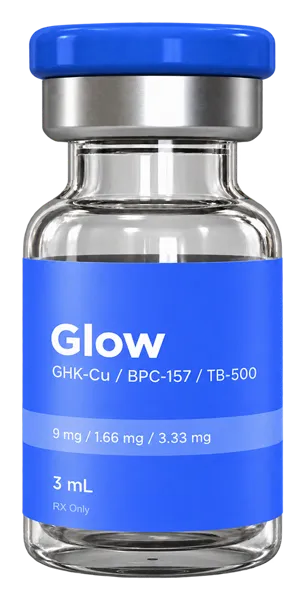
Status (injectable GHK-Cu): Not FDA-approved; sold by some telehealth providers as a compounded prescription. What these status terms mean.
Sources and further reading
Every clinical statement on this page traces to a primary source, listed here so you can verify it directly.
- Pyo et al., The effect of tripeptide-copper complex on human hair growth in vitro (Arch Pharm Res, 2007)
- Pickart & Margolina, Regenerative and Protective Actions of the GHK-Cu Peptide in the Light of the New Gene Data (Int J Mol Sci, 2018)
- Kuceki et al., Enhanced hair regrowth with five monthly sessions of minoxidil-dutasteride-copper peptides tattooing for androgenetic alopecia (JAAD International, 2025)
- Devjani et al., Androgenetic Alopecia: Therapy Update (Drugs, 2023)
Educational information only, not medical advice. Every scientific statement here is sourced to the primary literature cited above; reviewed October 12, 2026.
Advertising disclosure: links marked "Paid link" go to Bodybuilding Peptides (trybbpeptides.com), an affiliate destination, and Complexion Science may earn a commission if you buy there. Our coverage is independent of that relationship, and nothing on this page is medical or legal advice.
 See it at Bodybuilding Peptides