Is Melanotan safe for tanning? What MT2 does to skin and moles

The short answer
There is no evidence that Melanotan II is safe for tanning. It has only very small early human studies and no large completed trials. Dermatology case reports link it to new and darkening moles, several melanomas and serious systemic reactions, and the Skin Cancer Foundation warns against injectable or nasal-spray tanning drugs. Sunless self-tanners are the alternative it recommends.
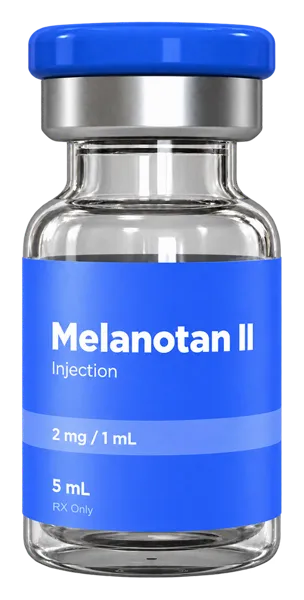
“Tanning injections” and Melanotan nasal sprays keep resurfacing online, pitched as a shortcut: a deep tan without hours in the sun. The compound behind most of them is Melanotan II, often shortened to MT2, a lab-made copy of the hormone that tells skin to make pigment. A 2026 case report notes its popularity, particularly through promotion on social media (Bonchev, Life, 2026), and in July 2026 the Skin Cancer Foundation issued a fresh warning against it (Skin Cancer Foundation, 2026). This page looks at Melanotan II from the skin’s point of view: what it does to skin and moles, what the research does and does not show, whether nasal sprays are any different, whether it works without sun, and what dermatologists and users report. It is educational only, with a source for every claim, and nothing here is medical advice. For the full substance overview, see the Melanotan II page on The Treatment Report.
Is Melanotan II safe for tanning?
No study has shown that it is, and the published record points the other way. Dermatologists describe it as unlicensed and incompletely tested (Hjuler & Lorentzen, Dermatology, 2014), and its published human evidence is a handful of very small early studies (Dorr et al., Life Sciences, 1996; Wessells et al., J Urol, 1998). Dermatology case reports link it to new and darkening moles, several melanomas, and serious whole-body reactions. The Skin Cancer Foundation says its safety has not been established and advises people seeking a tan to avoid injectable or intranasal tanning drugs and consider sunless self-tanners instead (Skin Cancer Foundation, 2026).
What is Melanotan II and why do people use it to tan?
Melanotan II is a synthetic, ring-shaped (cyclic) peptide built on a short stretch of alpha-melanocyte-stimulating hormone (α-MSH), the body’s own pigment signal. The University of Arizona team that ran a pilot study of it in people described it as having “superpotent” pigment-stimulating activity in lab tests (Dorr et al., Life Sciences, 1996). It works mainly by switching on the melanocortin 1 receptor on pigment cells, which drives production of eumelanin, the dark pigment behind a tan (Gilhooley et al., Dermatology, 2021; Bonchev, 2026).
Almost all non-medical use is cosmetic. A 2017 dermatology review says Melanotan I and II are used primarily for their tan-stimulating effects, and that the products move through a “tanning culture” in certain groups (Habbema et al., 2017). A study of 623 forum posts from 205 people in the UK and Ireland found the main motivation was a tanned look, often ahead of sun holidays and fitness or bodybuilding competitions (Gilhooley et al., 2021). A Boston dermatologist who surveyed forum users noted that the melanotans can be bought online with relative ease and are injected under the skin to stimulate a tan (Callaghan, Dermatol Online J, 2018). Melanotan II is also used as a sexual stimulant (Nelson, Bryant & Aks, Clin Toxicol, 2012), a separate story covered on the hub page.
What does the research on Melanotan II show?
The evidence level, in words: very small early human studies, plus a growing pile of case reports describing harm. There are no large, completed trials of Melanotan II for tanning. The tanning data trace mainly to a 1996 pilot study in three healthy men, in which two showed increased pigmentation of the face, upper body and buttocks, measured by reflectance, a week after a two-week course (Dorr et al., 1996). A separate small crossover study in ten men looked at its effect on erections rather than skin (Wessells et al., J Urol, 1998). PeptideAgent’s Melanotan II profile tracks the regulatory side, including its FDA compounding status and the case reports behind it, with sources.
That is the whole controlled evidence base for the tanning claim: a few people, a few weeks, under medical supervision with a known product. It says nothing about months or years of use, about people with many moles, or about vials bought online. The 2017 review draws the contrast clearly: afamelanotide, the related molecule known in research as Melanotan I (Mun et al., Int J Mol Sci, 2023), “has been thoroughly tested and deemed safe” for its limited medical uses, while the unregulated melanotans “are likely risky for several reasons” (Habbema et al., 2017). Our hub’s Melanotan 1 vs Melanotan 2 comparison walks through that split in detail.
What does Melanotan II do to moles?
Melanotan II can make existing moles darker and trigger crops of new ones, sometimes within days, and dermatologists have documented this repeatedly. The 2017 review says increasing numbers of case reports link unregulated Melanotan I and II use to changes in existing moles and newly emerging, sometimes dysplastic (atypical), moles (Habbema et al., 2017). A few examples from the dermatology literature:
- New moles within a day. A German dermatology department reported eruptive moles and darkening of existing moles 24 hours after a single injection of Melanotan II (Schulze et al., Eur J Dermatol, 2014).
- Atypical moles in a high-risk patient. A 40-year-old man with a history of melanoma and multiple dysplastic moles self-administered a synthetic α-MSH peptide and developed crops of new moles, many with atypical features under the microscope, and his existing moles darkened and showed growth features. After he stopped, the moles progressively lightened. The authors concluded that synthetic α-MSH peptides can drive the growth of abnormal pigment cells in predisposed people (Cardones & Grichnik, Arch Dermatol, 2009).
- A pattern across many reports. A systematic review of eruptive moles from any cause gathered 179 patients from 93 articles. Immunosuppressive drugs, chemotherapy or melanotan were the suspected trigger in 41%; 16% of all cases had at least one confirmed dysplastic mole, and five cases of associated melanoma were reported. The authors said the data could not measure the risk of moles turning cancerous (Burian & Jemec, Am J Clin Dermatol, 2019).
- Pigment inside the mouth. A 2026 case report describes brown patches on the gums and inner cheeks of a person who injected Melanotan II for 64 days to deepen a tan; the cheek patches nearly faded a month after stopping, but the gum pigmentation was still visible at three months (Bonchev, 2026).
The surveillance problem matters as much as the moles themselves. British dermatologists warned that these products “can complicate the clinical presentation” of people with pigmented lesions, and that use may be suspected in “unexpectedly tanned individuals with rapidly pigmenting naevi” (Langan, Nie & Rhodes, Br J Dermatol, 2010). When many moles change at once, the one that needs attention is harder to spot. For comparison, even the tested, approved relative afamelanotide (sold as the Scenesse implant for a rare light disorder) carries a label warning that it may darken existing moles and freckles, and recommends a full-body skin examination twice a year (Scenesse label, FDA, 2019).
Can Melanotan II cause melanoma?
It has not been proven to cause melanoma, but melanomas have been reported during or soon after use, often alongside sunbeds. The 2017 review counted four case reports of melanoma arising from existing moles during or shortly after melanotan use, while noting that conclusive evidence linking the two is lacking (Habbema et al., 2017). Later reports add to that list:
- A 20-year-old woman with fair (Fitzpatrick type II) skin was diagnosed with melanoma three months after a three-to-four-week course of Melanotan II self-injections intended to boost sunbed tanning (Hjuler & Lorentzen, Dermatology, 2014).
- A 22-year-old woman who used a Melanotan II nasal spray to tan developed a mucosal malignant melanoma in the upper jaw and needed surgery and immunotherapy (Yassin Alsabbagh et al., Int J Oral Maxillofac Surg, 2025).
- A 2026 case report describes five separate melanomas in situ in a patient with recent tanning-bed use, melanotan exposure and anabolic hormone use (Vadner & Smith, JAAD Case Reports, 2026).
Case reports cannot show cause and effect, a point the Skin Cancer Foundation makes itself (Skin Cancer Foundation, 2026). Several of these patients were also using sunbeds, which are a known skin-cancer risk on their own (O’Leary, Diehl & Levins, J Am Acad Dermatol, 2014). What the reports do show is a consistent signal that dermatologists take seriously, in a product that has never been studied long enough to rule the risk in or out.
What are the other side effects of Melanotan II?
Beyond the skin, Melanotan II acts on melanocortin receptors throughout the body, so its side effects reach well past a tan. In the early supervised studies, the common ones were mild nausea, a stretching-and-yawning response, decreased appetite, and spontaneous erections that came and went over one to five hours after a dose; one volunteer had moderate (grade II) sleepiness and fatigue at the highest amount tested (Dorr et al., 1996; Wessells et al., 1998). Case reports describe rarer but serious problems:
| Reported effect | What happened | Evidence type |
|---|---|---|
| Nausea, yawning and stretching, lower appetite | Reported more often than placebo in the early studies; none needed treatment | Small supervised human studies |
| Spontaneous erections | Came and went over 1 to 5 hours after dosing in the 1996 pilot | Small supervised human study |
| Priapism | A prolonged erection associated with a Melanotan II overdose, described in a letter to a toxicology journal | Published letter |
| Racing heart, muscle breakdown, kidney injury | A man who injected a large amount to darken his skin in winter needed intensive care; lab testing confirmed the substance was Melanotan II | Case report |
| Kidney infarction | A Swedish nephrology team reported a blocked kidney blood supply “most likely attributed” to Melanotan II | Case report with literature review |
| New, darker and atypical moles; melanoma reports | See the sections above | Multiple case reports and reviews |
Sources for the table: Dorr et al., 1996; Wessells et al., 1998; Devlin, Pomerleau & Foote, Clin Toxicol, 2013; Nelson et al., 2012; Peters et al., CEN Case Reports, 2020. If you are weighing any new skin active against your existing routine, our guide to building a peptide skin routine safely covers how to think about evidence and tolerance.
Is MT2 safe?
MT2 is simply Melanotan II, so the answer is the same: there is no evidence it is safe, and serious harms are documented. Its human data come from studies of three to ten people, while case reports describe mole changes, melanoma diagnoses, priapism and muscle and kidney injury (Habbema et al., 2017; Devlin et al., 2013; Nelson et al., 2012). The Skin Cancer Foundation says the full range of short- and long-term effects remains unknown (Skin Cancer Foundation, 2026).
Is Melanotan nasal spray safer than injections?
There is no evidence that it is, and almost no research on it at all. A PubMed search we ran on October 12, 2026, for Melanotan with “nasal” or “intranasal” returned three records: a rat study, a German review of erectile dysfunction treatments, and a 2025 case report of a 22-year-old woman who developed melanoma inside her mouth after using a Melanotan II nasal spray to tan (Yassin Alsabbagh et al., 2025). None was a study of nasal spray safety in people. A spray skips the needle, but the active ingredient and its effect on pigment cells are the same, and two of the case reports above describe problems in the lining of the mouth, pigment patches in one and a melanoma in the other (Bonchev, 2026; Yassin Alsabbagh et al., 2025). The Skin Cancer Foundation’s advice covers both routes: avoid injectable or intranasal tanning drugs (Skin Cancer Foundation, 2026).
Does Melanotan 2 work without sun?
Partly. Melanotan II can darken skin on its own, and research on its close relative Melanotan I suggests light amplifies the effect; many users pair it with sunbeds. In the 1996 pilot, two of three men had measurably darker skin a week after a short course of injections; the abstract describes injections only, with no sun-exposure program (Dorr et al., 1996), and a 2026 case report describes its pigment effect as independent of sun exposure (Bonchev, 2026). For the closely related Melanotan I, a 2004 trial found the peptide and sunlight “act synergistically,” with treated volunteers tanning more and needing less sun to match controls (Dorr et al., Arch Dermatol, 2004).
In practice, users rarely skip the light. Sunbed use was one of the main themes in the UK and Irish forum study (Gilhooley et al., 2021), and the 20-year-old in the 2014 melanoma report was using Melanotan II specifically to augment sunbed tanning (Hjuler & Lorentzen, 2014). A 2025 history of “safe” tanning technologies argues that “UV-free” products, including Melanotan injections, promoted the older risk-laden tanning practices and reinvigorated tanning culture overall (Creed, 2025). So the “no sun needed” pitch and the way people actually use it are often two different things.
How does Melanotan II compare with sunbeds and self-tanners?
Each route to a tan carries a different kind of risk, and only one is recommended by skin-cancer groups. This table sets Melanotan II beside the alternatives people usually weigh it against.
| Route | How it darkens skin | Evidence level, in words | Main skin concerns | What dermatology sources say |
|---|---|---|---|---|
| Melanotan II (injection or spray) | Switches on pigment production in pigment cells | Very small early human studies; no large trials; many case reports of harm | New, darker and atypical moles; melanoma case reports; harder mole surveillance | Avoid; use sunless self-tanners instead |
| Afamelanotide (Scenesse implant) | Same pigment-signal family; slow-release implant | Approved drug, labeled use, for a rare light disorder only (not cosmetic) | Darkening of moles and freckles; label recommends twice-yearly full-body skin exams | Approved only for erythropoietic protoporphyria (EPP), not for tanning |
| Sunbeds and sunbathing | UV light triggers the skin’s own tanning response | Large body of research | UV damage and skin cancer; indoor tanning is described as photocarcinogenic | High-risk tanning behavior |
| Sunless self-tanner (DHA) | A cosmetic ingredient, usually dihydroxyacetone (DHA), applied to the skin | Ingredient and safety reviews; reaction reports from customers | Occasional irritant or allergic contact dermatitis; minimal sun protection | A safer, UV-free option; keep using sunscreen |
Sources for the table: Habbema et al., 2017; Skin Cancer Foundation, 2026; Scenesse label, FDA, 2019; O’Leary et al., 2014; Black et al., J Drugs Dermatol, 2026. In the 2026 self-tanner review, all 37 best-selling products studied relied on dihydroxyacetone (DHA), about 2% of customer reviews mentioned a skin reaction, and only one product contained sunscreen, so the authors advise continuing regular sunscreen use (Black et al., 2026).
What is actually in a Melanotan vial?
You often cannot know, and that is a risk on top of the drug itself. When researchers bought Melanotan II tanning vials from three online shops and analyzed them, every vial held less active ingredient than its label claimed, roughly 43% to 88% of the stated amount, and vials from two of the shops contained unknown impurities of about 4% to 6% (Breindahl et al., Drug Test Anal, 2015). The 2017 review lists questions about preparation, administration and dosage among the core reasons the unregulated melanotans are risky (Habbema et al., 2017), and the forum study flagged infection transmission and potentially contaminated products (Gilhooley et al., 2021).
That is the useful way to think about cost. Whatever a vial or spray costs, the buyer has no reliable way of knowing its purity or contents (Skin Cancer Foundation, 2026), and the price does not include the twice-yearly full-body skin checks the approved relative’s label recommends (Scenesse label, FDA, 2019).
What are users and dermatologists saying about Melanotan?
The two conversations barely overlap. Our community tracker does not have a Melanotan dataset yet, so this summary draws on published studies of user forums and on dermatology sources.
- Users talk about results and routines. The 2021 forum study found the conversation centered on motivation (a tan before holidays or competitions), product preparation, dosing regimens, sunbed use and side effects, with misinformation a recurring theme (Gilhooley et al., 2021). A survey posted to an online melanotan forum asked users why they started, what made them hesitate, how hard it was to get, and whether they planned to keep using it (Callaghan, 2018).
- Social media keeps it in circulation. The 2026 oral pigmentation case report describes Melanotan II’s popularity as driven particularly by promotion on social media (Bonchev, 2026).
- Dermatologists talk about moles. The recurring message in the dermatology literature is to be aware of melanotan use in unexpectedly tanned patients with rapidly pigmenting moles (Langan et al., 2010), and the 2017 review notes that multiple national health organizations have issued safety warnings (Habbema et al., 2017). The Skin Cancer Foundation’s 2026 statement notes it is also known as “the Barbie drug” and urges anyone with concerns about changing moles to see a board-certified dermatologist (Skin Cancer Foundation, 2026).
Our read: the online pitch frames Melanotan II as a cleaner alternative to sunbathing, while the people who look at skin for a living keep seeing it alongside sunbeds and changing moles. Forum posts describe what people are doing; they are not evidence that it is safe.
Who should be especially cautious about Melanotan II?
People with a personal or family history of melanoma, many moles, or previously atypical (dysplastic) moles face the clearest concern, because the strongest case report describes Melanotan-type peptides driving atypical mole growth in exactly that kind of patient (Cardones & Grichnik, 2009). People who combine it with sunbeds feature in several of the melanoma reports (Hjuler & Lorentzen, 2014; Vadner & Smith, 2026). Anyone who has used Melanotan II and notices new, darkening or changing moles, or new pigment in the mouth, has good reason to have their skin checked by a dermatologist, which is the step the Skin Cancer Foundation recommends (Skin Cancer Foundation, 2026).
Status (Melanotan II): Not FDA-approved for any use. What this status means.
The bottom line on Melanotan II safety
Melanotan II does darken skin, which is exactly why it keeps trending. But the evidence behind it is a few tiny early studies, while the evidence against it keeps growing: new and darkening moles, atypical moles in high-risk patients, melanoma reports after injections and a nasal spray, and rare but serious whole-body reactions (Habbema et al., 2017; Burian & Jemec, 2019; Yassin Alsabbagh et al., 2025). Vials bought online may not even contain what the label says (Breindahl et al., 2015). If the goal is a tan, dermatology groups point to sunless self-tanners plus sunscreen. If you have already used it, a skin check is the sensible next step. For the wider picture, including the libido effect and how MT2 differs from Melanotan 1, see the hub’s Melanotan II overview and Melanotan 1 vs 2 comparison.
Sources and further reading
- The Skin Cancer Foundation. The Skin Cancer Foundation Issues Warning Regarding Melanotan II. July 7, 2026
- Habbema L, Halk AB, Neumann M, Bergman W. Risks of unregulated use of alpha-melanocyte-stimulating hormone analogues: a review. Int J Dermatol. 2017;56(10):975-980
- Dorr RT, et al. Evaluation of melanotan-II, a superpotent cyclic melanotropic peptide in a pilot phase-I clinical study. Life Sci. 1996;58(20)
- Wessells H, et al. Synthetic melanotropic peptide initiates erections in men with psychogenic erectile dysfunction: double-blind, placebo controlled crossover study. J Urol. 1998;160(2):389-93
- Cardones AR, Grichnik JM. alpha-Melanocyte-stimulating hormone-induced eruptive nevi. Arch Dermatol. 2009;145(4):441-4
- Schulze F, et al. Eruptive naevi and darkening of pre-existing naevi 24 h after a single mono-dose injection of melanotan II. Eur J Dermatol. 2014;24(1):107-9
- Burian EA, Jemec GBE. Eruptive Melanocytic Nevi: A Review. Am J Clin Dermatol. 2019;20(5):669-682
- Langan EA, Nie Z, Rhodes LE. Melanotropic peptides: more than just ‘Barbie drugs’ and ‘sun-tan jabs’? Br J Dermatol. 2010;163(3):451-5
- Hjuler KF, Lorentzen HF. Melanoma associated with the use of melanotan-II. Dermatology. 2014;228(1):34-6
- Vadner DJ, Smith S. Five primary melanomas in situ in a patient with recent tanning bed use, melanotan exposure, and anabolic hormone use. JAAD Case Rep. 2026;73:111-114
- Yassin Alsabbagh A, Bhujel N, Singh RP. Melanotan II nasal spray: a possible risk factor for oral mucosal malignant melanoma? Int J Oral Maxillofac Surg. 2025;54(9):806-808
- Bonchev A. Changes in Oral Mucosa Associated with Melanotan II Injections: A Case Report. Life (Basel). 2026;16(2):265
- Nelson ME, Bryant SM, Aks SE. Melanotan II injection resulting in systemic toxicity and rhabdomyolysis. Clin Toxicol. 2012;50(10):1169-73
- Devlin J, Pomerleau A, Foote J. Melanotan II overdose associated with priapism. Clin Toxicol. 2013;51(4):383
- Peters B, et al. Melanotan II: a possible cause of renal infarction: review of the literature and case report. CEN Case Rep. 2020;9(2):159-161
- Breindahl T, et al. Identification and characterization by LC-UV-MS/MS of melanotan II skin-tanning products sold illegally on the Internet. Drug Test Anal. 2015;7(2):164-72
- Gilhooley E, Daly S, McKenna D. Melanotan II User Experience: A Qualitative Study of Online Discussion Forums. Dermatology. 2021;237(6)
- Callaghan DJ III. A glimpse into the underground market of melanotan. Dermatol Online J. 2018;24(5)
- Dorr RT, et al. Effects of a superpotent melanotropic peptide in combination with solar UV radiation on tanning of the skin in human volunteers. Arch Dermatol. 2004;140(7):827-35
- Creed F. Sunbeds, dihydroxyacetone (DHA) fake tan, and MelanoTan injections: A history of ‘safe’ tanning technologies. Manchester University Press, 2025
- O’Leary RE, Diehl J, Levins PC. Update on tanning: More risks, fewer benefits. J Am Acad Dermatol. 2014;70(3):562-8
- Black TA, et al. Sunless Tanners in Dermatology: A Review of Ingredients, Efficacy, and Safety Profiles. J Drugs Dermatol. 2026;25(1):30-35
- U.S. Food and Drug Administration. SCENESSE (afamelanotide) implant prescribing information, 2019
- Mun Y, Kim W, Shin D. Melanocortin 1 Receptor (MC1R): Pharmacological and Therapeutic Aspects. Int J Mol Sci. 2023;24(15):12152
Educational information only, not medical advice. Our community tracker has no Melanotan dataset yet; the community section summarizes published forum studies and dermatology sources. Every clinical statement on this page traces to the sources above; updated October 13, 2026.
Advertising disclosure: links marked "Paid link" go to Bodybuilding Peptides (trybbpeptides.com), an affiliate destination, and Complexion Science may earn a commission if you buy there. Our coverage is independent of that relationship, and nothing on this page is medical or legal advice.
 See it at Bodybuilding Peptides