Oral minoxidil for hair loss: does the pill version work, and is it better than the foam?
The short answer
Oral minoxidil is an old blood-pressure tablet that some dermatologists now prescribe at low doses for hair loss. Small randomized trials found it grows hair about as well as topical minoxidil, not clearly better. Its appeal is convenience: one pill instead of a twice-daily scalp application, with more unwanted body hair as the trade-off.
Oral minoxidil is one of the more interesting hair-loss stories of the last few years, because almost nothing about the drug is new. It is a decades-old blood-pressure tablet whose best-known side effect is extra hair. What changed is who talks about it: first a handful of hair specialists, then a widely shared 2022 newspaper story whose effect on searches and prescriptions researchers later measured. In the medical literature the low-dose use goes by “LDOM” (low-dose oral minoxidil). This page is an evidence guide and a bit of social commentary. It covers what oral minoxidil is, who uses it and why, what the randomized trials and large safety studies actually found (with the strength of that evidence stated in words), side effects, how it compares with the topical version, what it costs, and what the wider conversation looks like. It is educational only, not medical advice, and it does not tell anyone how to take it.
What is oral minoxidil?
Oral minoxidil is minoxidil in tablet form. The tablets are approved in the US for one job: treating serious high blood pressure. The current label calls minoxidil a “powerful antihypertensive agent,” reserves it for patients whose blood pressure is not controlled by maximum doses of a diuretic plus two other blood-pressure drugs, and carries a boxed warning that it can cause pericardial effusion (fluid around the heart), occasionally progressing to tamponade (minoxidil tablets label, DailyMed).
The same label explains why the drug ended up in hair clinics. At blood-pressure doses, “elongation, thickening, and enhanced pigmentation of fine body hair” appears in about 80% of patients, usually within 3 to 6 weeks. Topical minoxidil, the foam or solution applied to the scalp, is one of the few treatments approved for pattern hair loss (Desir et al., Skin Appendage Disorders, 2023).
What dermatologists prescribe for hair is a much smaller dose of the tablet than blood-pressure patients take, which is where “low-dose oral minoxidil” comes from. Using it for hair loss is off-label: the drug is approved, but not for this purpose. A 2025 international consensus statement from 43 hair-loss specialist dermatologists in 12 countries describes exactly that situation, noting that small studies suggest low-dose use may be safe and effective but that “larger trials and standardized guidelines are lacking” (Akiska et al., JAMA Dermatology, 2025).
Why did oral minoxidil become popular for hair loss?
Oral minoxidil became popular because hair specialists had been quietly using it for years and a single newspaper story put it in front of everyone else. On August 18, 2022, The New York Times ran a story headlined “An Old Medicine Grows New Hair for Pennies a Day, Doctors Say” (The New York Times, 2022). Two research groups then measured the effect of that one article:
- Searches jumped. A Google Trends analysis found relative search volume for “oral minoxidil” rose from 0.86 to 3.00 after the article, a significant and sustained increase, while searches for Rogaine and for “hair loss” stayed roughly flat (Desir et al., 2023).
- Prescriptions jumped. Using health records from 8 US health systems, a study in JAMA Network Open found the weekly rate of first-time oral minoxidil prescriptions (2.5 mg and 5 mg tablets) was 0.9 per 10,000 outpatient visits in the 8 weeks after publication versus 0.5 in the 8 weeks before. That was a 2.4-fold rise for men and a 1.7-fold rise for women, which then eased off (Goodwin Cartwright et al., JAMA Netw Open, 2023).
The authors of the prescribing study made the sharpest point about the whole episode: the article “did not report new research findings,” yet media coverage alone “may be associated with immediate changes in prescribing,” changes that may not be sustained. The trend was also building before 2022. Rodney Sinclair, the Melbourne dermatologist MDEdge describes as having conducted the original research on low-dose oral minoxidil for hair loss, told MDEdge that 2022 survey data from the International Society of Hair Restoration Surgery showed 26% of treating physicians always or often prescribed it, up from 10% in 2019 and 0% in 2017 (MDEdge).
Who uses oral minoxidil, and why?
The people using oral minoxidil are mostly adults with pattern hair loss, many of them women, and the most common reason is that topical minoxidil was a hassle. In a large multicenter safety study of 1,404 people, 67.2% were women and 32.8% were men, with a mean age of 43; androgenetic alopecia (pattern hair loss) made up most cases, but the cohort included other forms of hair loss too (Vañó-Galván et al., JAAD, 2021; diagnosis share from Desir et al., 2023).
The “why” is mostly about topical minoxidil’s drawbacks. A review in the Journal of the American Academy of Dermatology notes that many patients are poorly compliant with topical minoxidil because of twice-daily application, an undesirable hair texture and scalp irritation (Randolph and Tosti, JAAD, 2021). The Google Trends authors cite a retrospective study of 400 patients prescribed topical minoxidil in which 86% had stopped, and they point out the foam or liquid can be aesthetically unacceptable for people with naturally curly hair who wear it straight (Desir et al., 2023).
A small survey at Ohio State University dermatology clinics illustrates the pull. Among 49 analyzed patients, those on oral minoxidil reported greater ease of treatment and easier hair styling, missed fewer treatment days, and none stopped because the treatment was hard to use, compared with 18.8% on topical (Kobayashi et al., J Drugs Dermatol, 2025). That is a small survey, not a trial, but it lines up with the compliance problems the JAAD review describes.
Does oral minoxidil work?
Yes, oral minoxidil grows hair in most studies, but the best trials so far show it working about as well as topical minoxidil, not clearly better. The evidence level, in words: an approved blood-pressure drug, supported for hair loss by a few small randomized trials lasting about six to nine months plus large retrospective case series; there are no large, long-term randomized trials.
- Reviews of the early work. A 2021 review found 17 studies with 634 patients using oral minoxidil as the main treatment for hair loss and concluded it was “an effective and well-tolerated treatment alternative” for healthy patients struggling with topicals, while calling for larger randomized studies (Randolph and Tosti, 2021).
- Head-to-head trials. A 2025 meta-analysis pooled four randomized trials with 279 patients comparing oral minoxidil with topical minoxidil solution over 24 to 39 weeks. It found no difference in hair density or hair diameter between the two (Sobral et al., Int J Dermatol, 2025). Randomized comparisons include one in women that tested 1 mg oral against 5% topical (Ramos et al., JAAD, 2020).
So the honest one-line answer to “does oral minoxidil work?” is: it works roughly the way topical minoxidil works, and its advantage is that more people keep taking it.
Oral minoxidil for men: what the male trial found
The key study of oral minoxidil for men is a 2024 double-blind randomized trial in JAMA Dermatology, run at a single clinic in Brazil. It enrolled 90 men aged 18 to 55 with pattern hair loss and gave them either 5 mg of oral minoxidil daily plus a placebo solution, or 5% topical minoxidil twice daily plus a placebo capsule, for 24 weeks (Penha et al., JAMA Dermatology, 2024).
| What was measured at 24 weeks | Oral 5 mg vs topical 5% |
|---|---|
| Terminal hair density, frontal scalp (primary) | Difference of 3.1 hairs per cm², not statistically significant |
| Terminal hair density, crown (primary) | Difference of 23.4 hairs per cm² favoring oral, not statistically significant (P = .09) |
| Expert photo assessment, crown | Oral judged better (24% difference, P = .04) |
| Expert photo assessment, front | No significant difference |
| Unwanted body or facial hair (hypertrichosis) | 49% oral vs 25% topical |
| Headache | 14% oral vs 2% topical |
| Scalp eczema / scalp itching | 2% / 2% oral vs 16% / 11% topical |
| Stopped because of side effects | 1 of 45 oral vs 3 of 45 topical |
The authors’ conclusion was that the oral dose “did not demonstrate superiority” over topical, though crown photos looked better on oral and the oral dose was well tolerated. They also listed real limitations: one center, a small sample, and heavy dropout, with 68 of 90 men completing, largely because of COVID-19 disruptions. Their bottom line was that low-dose oral minoxidil “is an option for patients who prefer oral therapy or are intolerant to topical treatment” (Penha et al., 2024). The 5 mg figure is what this trial used, reported here as a study detail, not a recommendation.
What do oral minoxidil results look like over time?
The trials measured results at 24 to 39 weeks, so anything you hear about dramatic changes in a few weeks is not what was studied (Sobral et al., 2025). In the male trial, hair shedding was reported by 9% on oral and 16% on topical, and the authors stressed that patients should be told about its transient, self-limited nature so they do not quit early (Penha et al., 2024).
Results also depend on how much hair is left to work with. The Times piece itself cautioned that it will not work if a man is mostly bald (The New York Times, 2022). Treat online “results” threads with the same caution you would apply to any before-and-after photo: lighting, haircut, angle and the person’s other treatments all change between pictures. We line up what the trials measured against what people report, month by month, in how long oral minoxidil takes to work.
Is oral minoxidil safe?
At the low doses used for hair, oral minoxidil has looked reasonably safe in studies so far, but those studies are mostly retrospective and none is a long-term randomized trial. In the 1,404-patient multicenter study, the most frequent side effect was hypertrichosis (15.1%); systemic effects were lightheadedness (1.7%), fluid retention (1.3%), fast heart rate (0.9%), headache (0.4%), swelling around the eyes (0.3%) and insomnia (0.2%), and no life-threatening events were observed (Vañó-Galván et al., 2021). The study had no control group, and the expert consensus lists long-term safety as an open research question (Akiska et al., 2025).
What are the side effects of oral minoxidil, and who should be cautious?
The side effect almost everyone notices is extra hair where they did not want it, and the side effects that matter most are cardiovascular. Here is what the main sources report, in order of how often they come up:
- Unwanted hair growth (hypertrichosis). 15.1% in the large safety study, leading 0.5% to stop (Vañó-Galván et al., 2021); 49% on 5 mg in the male trial (Penha et al., 2024). The meta-analysis found it about twice as likely on oral as on topical (Sobral et al., 2025). The label notes it reverses after stopping, though restoration can take 1 to 6 months (DailyMed).
- Lightheadedness, fast heart rate, fluid retention and swelling. Each under 2% in the large study, together leading 1.2% of patients to stop (Vañó-Galván et al., 2021).
- Headache. More common on oral than topical in the male trial (Penha et al., 2024).
- Low blood pressure. The meta-analysis found no significant difference in hypotension between oral and topical (Sobral et al., 2025).
- Pericardial effusion. The boxed-warning risk; the label puts it at about 3% of patients on blood-pressure doses who are not on dialysis, especially those with poor kidney function (DailyMed). That figure comes from hypertension treatment, not hair doses.
The 2025 consensus statement covers contraindications, precautions, a baseline evaluation and monitoring for anyone starting low-dose oral minoxidil, and the experts did not reach agreement on use in children under 12 (Akiska et al., 2025). The tablet label, written for blood-pressure doses, lists pheochromocytoma as a contraindication, warns about salt and water retention, kidney failure and pericardial effusion, and says minoxidil should not be given to a nursing woman (DailyMed). Those warnings are reasons for anyone with heart or kidney problems, fluid retention, or who is breastfeeding to start with a clinician’s assessment. That is a list of reasons to ask, not a dosing instruction. Questions such as weight gain, heart rate and body-hair growth get their own sections in our oral minoxidil side effects guide.
Is oral minoxidil better than topical?
Not clearly. In randomized trials, oral and topical minoxidil grew similar amounts of hair, and oral caused more unwanted body hair while topical caused more scalp irritation (Sobral et al., 2025; Penha et al., 2024). Where oral tends to win is convenience and sticking with it. Our oral vs topical minoxidil comparison goes through the trade-offs in more detail.
| Factor | Oral minoxidil (low dose) | Topical minoxidil (foam or solution) |
|---|---|---|
| Approval for hair loss | Not approved for hair loss; a blood-pressure tablet | Approved for pattern hair loss |
| How it is used | One tablet a day, by prescription | Applied to the scalp, once or twice daily |
| Hair growth in trials | Similar to topical in pooled randomized trials | Similar to oral in pooled randomized trials |
| Most common downside | Unwanted body or facial hair; headache | Scalp itching and eczema; greasy hair or unwanted texture |
| Low blood pressure | No significant difference from topical in pooled trials | No significant difference from oral in pooled trials |
| Sticking with it | Easier in surveys and case series | 86% had stopped in one 400-patient clinic study |
| Evidence level, in words | A few small randomized trials plus large retrospective case series | Approved drug with randomized trials behind it, including a 48-week trial in 393 men |
Sources: Sobral et al., 2025; Penha et al., 2024; Vañó-Galván et al., 2021; Randolph and Tosti, 2021; Kobayashi et al., 2025; Desir et al., 2023.
The topical-versus-prescribed question shows up across the skin and hair world, and the trade-offs rhyme: more convenience or potency on one side, more oversight and fewer unknowns on the other. Our explainer on topical vs prescribed skin peptides walks through the same tension for copper peptides.
Can oral minoxidil be combined with finasteride or other treatments?
People often ask about stacking oral minoxidil with finasteride, but the combination has not been tested in the head-to-head trials described above. Oral finasteride and topical minoxidil are FDA-approved treatments for male pattern hair loss, alongside low-level light therapy (Desir et al., 2023). The authors of the 2024 male trial listed combinations with topical minoxidil or 5-alpha-reductase inhibitors such as finasteride among the questions that still need larger trials (Penha et al., 2024), and the consensus statement includes adjunctive therapy among the areas where experts agreed on guidance, which is expert opinion rather than trial data (Akiska et al., 2025). Our explainer on oral minoxidil and finasteride walks through the combination studies that do exist and how strong each one is. Any combination is a decision for a prescriber.
Copper peptides are the other add-on that turns up in hair-loss threads. Our review of whether copper peptides help hair growth found the human evidence thin, with the one study showing regrowth mixing copper peptides with minoxidil and dutasteride, so the credit cannot go to the peptide. If you are adding any scalp or skin product alongside a hair-loss drug, the same one-change-at-a-time logic in our guide to building a peptide skin routine safely applies: introduce one thing at a time so you can tell what is causing what.
How much does oral minoxidil cost?
Low cost is a big part of the oral minoxidil story; the Times headline itself promised hair “for pennies a day” (The New York Times, 2022). What any one person pays depends on the pharmacy, the tablet strength and the plan, and we do not have national price data to summarize.
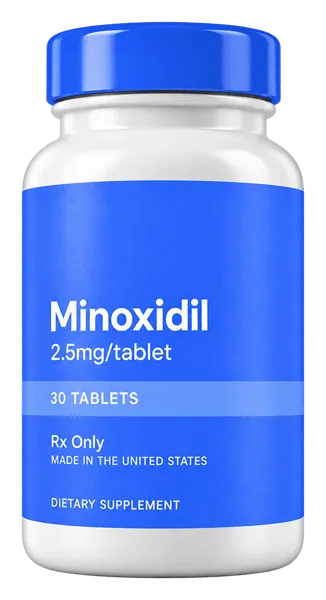
As one dated reference point, Bodybuilding Peptides listed a 2.5 mg oral minoxidil tablet at $99 for a one-month plan and $89 per month on a three-month plan when we checked on October 12, 2026, with lower monthly rates on six-month ($79) and twelve-month ($69) plans. Prices change, so treat that as a snapshot, not a quote. Because the tablet needs a prescription, we explain the intake and provider-review steps in how oral minoxidil prescriptions work online.
What are people saying about oral minoxidil?
Our community tracker does not yet have a dedicated oral minoxidil dataset, so this section relies on published research that studied the public conversation, which shows it shaped heavily by one media moment:
- One article moved the needle. Searches and first-time prescriptions both rose sharply after the 2022 Times story, and the prescribing bump then eased off (Desir et al., 2023; Goodwin Cartwright et al., 2023).
- Hair loss is emotional. A study of reader comments on that article found the negative psychological consequences of hair loss were a common theme, women more often expressed psychosocial stress than men, and commenters showed interest in trying oral minoxidil, women more than men (as summarized in Desir et al., 2023).
- Convenience is the selling point. Patients on oral minoxidil in the Ohio State survey reported easier routines and more satisfaction with hair volume than those on topical, while reporting far more unwanted hair growth, 48.5% versus 6.25% (Kobayashi et al., 2025).
- Clinicians are cautiously on board. A dermatologist interviewed by MDEdge after the Times piece welcomed the attention for getting people to seek care, while warning it could lead some to expect help where it will not come or to insist on it when another drug fits better (MDEdge).
The myth-versus-evidence summary: the idea that “oral beats topical” is not supported by the randomized trials as a general rule; even the male trial’s authors noted the “expectations of the great superiority of oral minoxidil” had not been borne out (Penha et al., 2024). “Oral is easier to stick with” is the claim the evidence does support.
The bottom line on oral minoxidil
Oral minoxidil is an old, approved blood-pressure drug that hair specialists repurposed at low doses, and a 2022 newspaper story turned it into a mainstream talking point. The best randomized evidence shows it grows hair about as well as topical minoxidil, with more unwanted body hair and fewer scalp complaints, and large case series suggest serious problems are uncommon at low doses. What is still missing is large, long-term trials. If the foam or solution has not worked for you because you could not keep using it, that is exactly the situation where specialists say the tablet is worth a conversation with a dermatologist.
Status: Minoxidil, the active ingredient, is FDA-approved; compounded versions are not FDA-approved, and use for hair loss is off-label. What these status terms mean.
Sources and further reading
- Penha MA, Miot HA, Kasprzak M, Ramos PM. Oral Minoxidil vs Topical Minoxidil for Male Androgenetic Alopecia: A Randomized Clinical Trial. JAMA Dermatol. 2024;160(6):600-605
- Sobral MVS, et al. Efficacy and safety of oral minoxidil versus topical solution in androgenetic alopecia: a meta-analysis of randomized clinical trials. Int J Dermatol. 2025;64(3):479-484
- Vañó-Galván S, et al. Safety of low-dose oral minoxidil for hair loss: A multicenter study of 1404 patients. J Am Acad Dermatol. 2021;84(6):1644-1651
- Randolph M, Tosti A. Oral minoxidil treatment for hair loss: A review of efficacy and safety. J Am Acad Dermatol. 2021;84(3):737-746
- Ramos PM, Sinclair RD, Kasprzak M, Miot HA. Minoxidil 1 mg oral versus minoxidil 5% topical solution for the treatment of female-pattern hair loss: A randomized clinical trial. J Am Acad Dermatol. 2020;82(1):252-253
- Akiska YM, et al. Low-Dose Oral Minoxidil Initiation for Patients With Hair Loss: An International Modified Delphi Consensus Statement. JAMA Dermatol. 2025;161(1):87-95
- Minoxidil tablets, USP: prescribing information (DailyMed, revised February 2024)
- Desir N, Desai AD, Lipner SR. Increased Interest in Oral Minoxidil for Hair Loss Treatment Following Publication of August 2022 New York Times Article: A Google Trends Analysis. Skin Appendage Disord. 2024;10(1):46-49
- Goodwin Cartwright BM, et al. Changes in Minoxidil Prescribing After Media Attention About Oral Use for Hair Loss. JAMA Netw Open. 2023;6(5):e2312477
- Kobayashi S, et al. Comparing Adherence, Side Effects, and Satisfaction in Oral and Topical Minoxidil: A Cross-Sectional Study. J Drugs Dermatol. 2025;24(2):131-133
- Ault A. Low-dose oral minoxidil for hair loss soars after NYT article. MDEdge, June 13, 2023
- An Old Medicine Grows New Hair for Pennies a Day, Doctors Say. The New York Times, August 18, 2022
Educational information only, not medical advice. Our community tracker has no oral minoxidil dataset yet; the community section summarizes published studies of the public conversation. Updated October 12, 2026.
Advertising disclosure: links marked "Paid link" go to Bodybuilding Peptides (trybbpeptides.com), an affiliate destination, and Complexion Science may earn a commission if you buy there. Our coverage is independent of that relationship, and nothing on this page is medical or legal advice.
 See it at Bodybuilding Peptides